Do you ever find yourself jonesing to ask Claude to do something you're not sure it can do? And then obsessively trying to get it to do the thing just the way you want?
Maybe that's just me. But I deeply suspect it's not.
I'll ask it to implement a feature. It gets close. Really close. Not quite what I wanted, but damn near. So I send another message and try again. It gets closer. Still not perfect. One more try.
Twenty minutes later I realize I could have just taken the first attempt and fixed it myself in five.
It reminded me of something I learned about slot machines.
The Near-Miss Effect
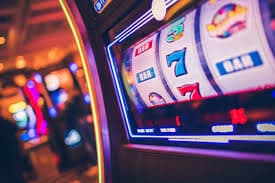
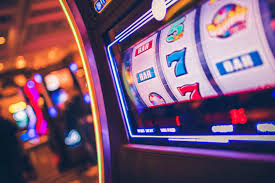
In the gambling world, there's this concept called the "near-miss." Two cherries line up, and the third one lands just above or below the payline. You didn't win. But you were so close.
Here's the thing. Slot machines used to be mechanical. Fully random. The house had a slight edge, but every spin was truly independent.
Then they went digital.
Regulators said: "Fine, but you have to keep the same payout percentage." So a machine with a 92% return-to-player rate on a mechanical machine had to maintain that rate digitally. Fair enough.
But here's what they didn't regulate: how often you could show someone a near-miss.
With a mechanical machine, near-misses happened randomly based on the physical reels. With a digital one, you could engineer them. Show that third cherry one position off the payline. Make it look like the player almost won, even though the RNG had already determined it was a loss.
The gambling industry figured out something dark: near-misses were more effective at keeping people gambling than actual wins.
Your Brain on Near-Misses
Researchers at Cambridge ran fMRI studies on gamblers and found that near-misses activate the same reward centers as actual wins. Your brain releases dopamine despite getting no reward.
Even stranger: if you have a gambling addiction, the near-miss response is stronger. Your brain literally treats near-misses as incomplete wins, not as losses.
The LLM Slot Machine
Back to Claude.
I ask it to refactor a component. It does it. The logic is mostly right. The structure is close. But it misses an edge case. Or it doesn't match my naming conventions. Or it breaks something subtle in how the state updates.
It's a near-miss.
My brain treats this differently than if it had produced garbage. If it gave me nonsense, I'd just do it myself. But because it got close, I think: "One more message and it'll get it."
So I clarify. I add more context. I point out what it missed. It tries again. Gets closer. Still not quite right.
I keep pulling the lever.
The problem isn't that the LLM is bad. It's optimized to give you something plausible, something that passes a quick scan but fails on execution. Something 80% of the way there.
That 80% is the third cherry landing one row off.
The Accidental Dark Pattern
Here's what I find interesting. Facebook, Instagram, and Twitter all spent years trying to reverse-engineer gambling psychology. Variable rewards. Notifications timed to pull you back. They studied this stuff and built it in deliberately.
LLMs just... have it. By accident. The near-miss isn't a feature they designed. It's just what the product is right now. And as they get better, and we expect more from them, the near-misses continue. It was so close to perfect.
As a heavy user of LLMs, this realization worries me...but I think I can keep myself from getting addicted...
I hope so 🤞